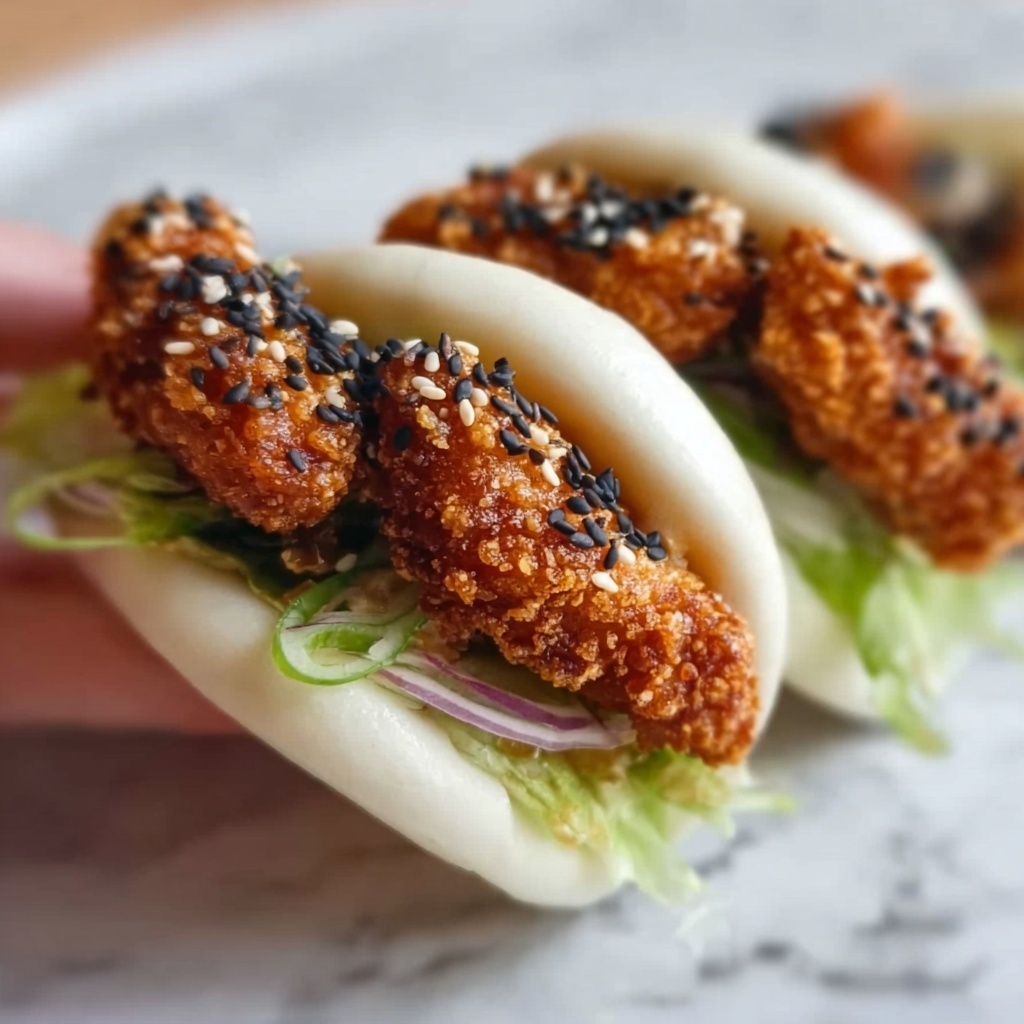
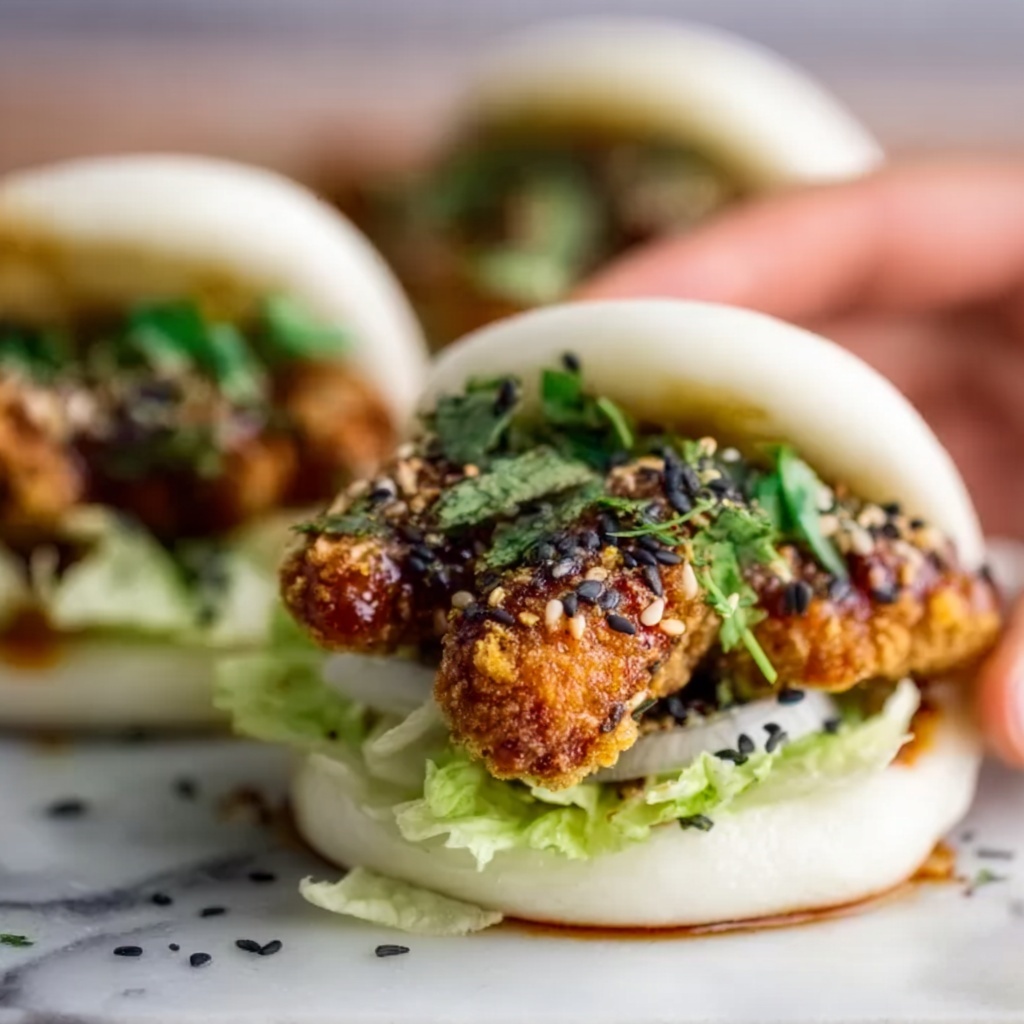
If you’re craving something irresistibly flavorful and delightfully soft, this Korean Chicken Bao Recipe is an absolute winner to add to your culinary repertoire. Imagine tender, juicy chicken thighs, coated in a crispy, perfectly seasoned batter, then drenched in a glossy, spicy-sweet Korean glaze that bursts with layers of umami. Wrapped inside pillowy steamed bao buns with refreshing ribbons of cucumber, sharp red onion, and the brightness of fresh coriander, every bite is a harmony of textures and bold tastes. Whether you’re hosting friends or simply feeding your own foodie soul, this recipe is sure to be a crowd-pleaser and quickly become a new favorite.
Ingredients You’ll Need
The magic of this Korean Chicken Bao Recipe lies in its simple yet carefully chosen ingredients, each one playing a crucial role in building those layers of flavor, texture, and color. With everyday pantry staples and a handful of Korean essentials, you can create something truly special right at home.
- Whole-egg mayonnaise: Creates a rich, creamy sesame sauce that balances spice and tang perfectly.
- Sesame oil: Adds a nutty aroma and depth to both the sauce and glaze.
- All-purpose soy sauce: Provides salty umami notes that enhance the chicken’s flavor.
- Rice vinegar: Brings a subtle acidity to brighten the glaze and sauce.
- Boneless, skinless chicken thighs: Perfectly juicy and tender for frying and soaking up flavors.
- Egg: Helps the flour coating stick to the chicken for a crispy finish.
- Cold water: Keeps the batter light and airy.
- Plain flour and cornflour: The dynamic duo that makes the chicken’s crust irresistibly crispy.
- Garlic powder, sea salt flakes, and white pepper: Seasonings that layer in savory, slightly spicy nuances.
- Neutral oil (light olive oil recommended): For frying to golden perfection without overpowering flavors.
- Freshly minced garlic: An aromatic base for the luscious glaze.
- Ketchup: Adds sweetness and a touch of tang to the sauce jamboree.
- Gochujang (Korean chili paste): The star ingredient for that authentic spicy kick and vibrant color.
- Honey: Balances heat with gentle sweetness and shines in the glaze’s texture.
- Brown sugar: Enhances caramel notes and deepens the flavor complexity.
- Toasted sesame seeds: Give a delicate crunch and unmistakable nuttiness to finish.
- Store-bought bao buns: Soft and fluffy, the perfect vessel for all the delicious fillings.
- Cucumbers and red onion, thinly sliced: Refreshing crunch and sharpness to contrast the rich chicken.
- Coriander (cilantro), finely chopped (optional): Bright herbal notes that lift every bite beautifully.
How to Make Korean Chicken Bao Recipe
Step 1: Make the Creamy Sesame Sauce
Begin by whisking together the whole-egg mayonnaise, sesame oil, soy sauce, and rice vinegar in a small bowl. This sauce brings a creamy, slightly tangy element that cuts through the richness of the chicken and adds a luscious coating to the bao buns. Refrigerate it until you’re ready to assemble your bao, so the flavors have a chance to mingle.
Step 2: Prepare the Chicken Coating
Place the diced chicken thighs into a medium bowl, then add the egg and cold water. Using tongs or a fork, mix until the chicken pieces are evenly coated. In the meantime, combine the plain flour, cornflour, garlic powder, sea salt flakes, and white pepper on a large sheet of parchment paper. Spread the flour mixture out flat to make it easier to coat the chicken evenly.
Step 3: Coat the Chicken Thoroughly
One by one, lift the chicken pieces out of the egg mixture allowing excess liquid to drip off, then place them on the prepared flour mixture. Fold up the parchment edges around the chicken and gently toss to ensure every piece gets a good, even coat of the crispy flour mix. This step is what creates that irresistible crunch.
Step 4: Cook the Chicken
For the crispiest results, heat neutral oil in a deep pan over medium heat and fry the chicken in batches for 5–6 minutes until golden and cooked through. Alternatively, for a lighter version, air fry the coated chicken at 200°C (400°F) for 12–14 minutes, shaking the basket halfway. Both methods yield deliciously satisfying bites.
Step 5: Make the Glaze
Gently warm the neutral oil and minced garlic in a small saucepan over low heat to avoid burning the garlic. Once fragrant and sizzling, add ketchup, gochujang, honey, soy sauce, brown sugar, rice vinegar, and water. Let it simmer for a couple of minutes until the glaze becomes glossy and slightly thickened, ready to coat the chicken with a sticky, flavorful finish.
Step 6: Toss the Chicken in the Glaze
Transfer your freshly fried chicken pieces into the warm glaze. Toss gently but thoroughly to ensure each morsel is enveloped in that delicious, spicy-sweet coating that epitomizes this Korean Chicken Bao Recipe’s signature flavor.
Step 7: Steam the Bao Buns
Steam the store-bought bao buns according to the package’s directions or your preferred steaming method until they’re soft and fluffy. Keep them warm by covering with a tea towel and loosely tenting with foil to maintain the perfect texture for assembling your baos.
Step 8: Assemble Your Korean Chicken Bao Buns
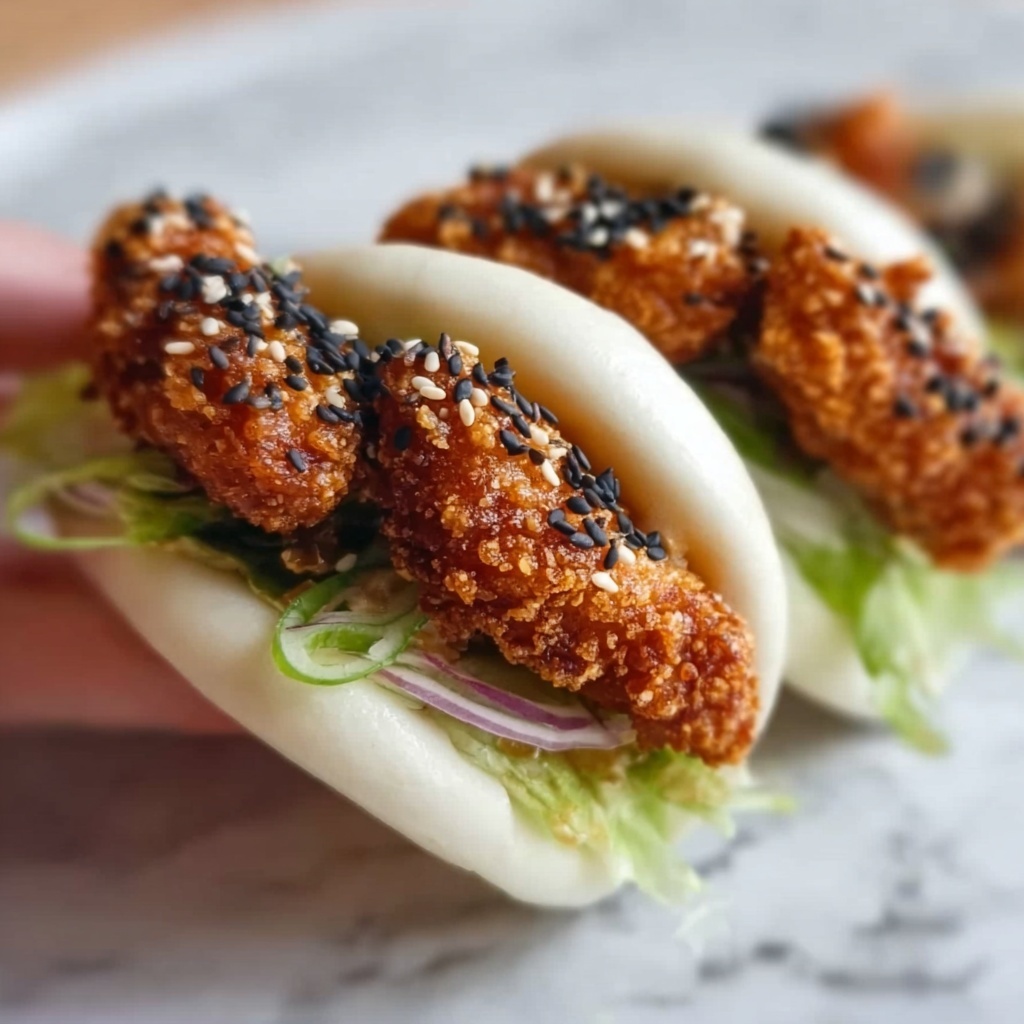
Open each warm bao bun and spread a generous dollop of the creamy sesame sauce inside. Add a few ribbons of cucumber, some thin red onion slices, a sprinkle of chopped coriander if you love that fresh herbaceous touch, and top with several pieces of the glazed chicken. Finish with toasted sesame seeds for that extra bit of crunch and nutty flavor.
Step 9: Serve and Enjoy!
Serve these beauties immediately while everything is warm, soft, and bursting with that perfect blend of flavors. Each bite delivers a delightful experience—crispy, tender chicken tucked inside fluffy bao, offset by fresh veggies and creamy, tangy sauce. This Korean Chicken Bao Recipe is perfect for sharing at dinner parties or savoring solo for a special treat.
How to Serve Korean Chicken Bao Recipe
Garnishes
Simple garnishes like extra toasted sesame seeds and finely chopped coriander elevate the flavors and presentation of your bao. Adding thin cucumber ribbons contributes a crisp, cooling crunch that contrasts beautifully with the sticky, savory chicken. A few red onion slices introduce a subtle bite and color contrast that makes these baos pop visually and on the palate.
Side Dishes
Pair your Korean Chicken Bao with light, refreshing sides to balance the richness. A crunchy Asian slaw, pickled radishes, or a cool cucumber salad with a splash of rice vinegar are excellent companions. Steamed edamame or a bowl of miso soup would round out the meal for an authentic and satisfying dining experience.
Creative Ways to Present
Elevate your Korean Chicken Bao Recipe by serving the assembled baos on a rustic wooden board alongside small bowls of extra creamy sesame sauce and gochujang. You can also jazz up the toppings by adding kimchi or quick-pickled vegetables for an extra zing. Beautifully arranged bamboo steamers make a charming presentation while keeping the baos warm and soft at the table.
Make Ahead and Storage
Storing Leftovers
Store any leftover glazed chicken and sauce separately from the bao buns in airtight containers in the refrigerator. This way, the buns stay soft, and the chicken retains its glaze and flavor without turning soggy. Leftover fresh vegetables can be kept separate as well, but cucumbers and onions are best enjoyed fresh for crunch.
Freezing
You can freeze the cooked glazed chicken in sealed containers or freezer bags for up to a month. Make sure it’s completely cool before freezing to preserve texture and taste. Bao buns freeze well too—just wrap them tightly in plastic wrap and a layer of foil. Thaw them gently and re-steam to refresh their softness.
Reheating
Reheat the glazed chicken gently in a skillet over low heat to avoid drying it out, adding a splash of water to loosen the glaze if needed. Bao buns can be revived to their pillowy state by steaming them gently or warming in the microwave wrapped in a damp paper towel. Assemble just before serving for the best texture and flavor.
FAQs
Can I use chicken breast instead of thighs?
Absolutely! Chicken breast can be used if you prefer leaner meat. Just be mindful it can dry out quicker, so avoid overcooking and monitor closely during frying or air frying.
Is gochujang very spicy?
Gochujang does have a moderate heat level with a sweet, fermented flavor. The amount used here balances spiciness and sweetness well, but you can adjust the quantity to suit your taste or substitute with a milder chili paste.
Can I make the bao buns from scratch?
Yes, making bao buns from scratch is rewarding and delicious but requires more time and effort. Store-bought buns are a convenient shortcut without sacrificing softness and flavor, especially for this quick Korean Chicken Bao Recipe.
What’s the best oil for frying the chicken?
Neutral oils with high smoke points like light olive oil, vegetable oil, or canola oil are ideal. They allow the chicken to crisp nicely without adding extra flavor that might compete with the glaze.
How do I keep the bao buns from drying out?
Steaming just before serving is key. Keep them warm by covering with a tea towel and loosely tenting with foil, which helps retain moisture and softness for 20-25 minutes.
Final Thoughts
This Korean Chicken Bao Recipe is a vibrant celebration of textures and flavors that come together to create an unforgettable meal. From the crispy chicken to the soft, fluffy buns and fresh garnishes, each bite brings delight and satisfaction. Give it a try—you’ll soon find it one of your cherished go-to recipes for sharing warmth, comfort, and a touch of bold Korean flair at your table.
Print
Korean Chicken Bao Recipe
- Prep Time: 15 minutes
- Cook Time: 25 minutes
- Total Time: 40 minutes
- Yield: 12 servings
- Category: Main Course
- Method: Frying
- Cuisine: Korean
Description
Korean Chicken Bao is a flavorful Asian-inspired dish featuring crispy chicken coated in a glazed spicy-sweet sauce, served inside soft, steamed bao buns with fresh cucumber, red onion, and optional coriander. This recipe balances a crunchy texture with creamy sesame sauce and vibrant toppings, perfect for an engaging meal or party snack.
Ingredients
Creamy Sesame Sauce
- ½ cup (125 g) whole-egg mayonnaise
- 1 tsp sesame oil
- 1 tsp all-purpose soy sauce
- 1 tsp rice vinegar
Chicken Coating
- 500 g (1 lb) boneless, skinless chicken thighs, cut into bite-sized pieces (can substitute with chicken breast)
- 1 egg
- 2 tbsp cold water
- ½ cup (75 g) plain (all-purpose) flour
- ½ cup (60 g) cornflour (cornstarch)
- 1 tsp garlic powder
- 1 tsp sea salt flakes
- ¼ tsp white pepper
Cooking Oil
- Neutral oil of choice for frying (e.g., light olive oil)
- 1 tbsp neutral oil (for glaze preparation, e.g., light olive oil)
Glaze
- 2 tsp freshly minced garlic
- 2 tbsp ketchup
- 2 tbsp gochujang (Korean chili paste)
- 2 tbsp honey
- 2 tbsp all-purpose soy sauce
- 1 tbsp brown sugar
- 1 tbsp rice vinegar
- 2 tbsp water
- 1 tbsp toasted sesame seeds
Bao Assembly
- 12 store-bought bao buns
- 2 small cucumbers, thinly sliced into ribbons
- ½ red onion, thinly sliced
- ¼ bunch coriander (cilantro), finely chopped (optional)
- 2 tsp toasted sesame seeds (for garnish)
Instructions
- Make the creamy sesame sauce: Whisk together whole-egg mayonnaise, sesame oil, soy sauce, and rice vinegar in a small bowl until smooth. Refrigerate until ready to use.
- Prepare the chicken coating: Place the chicken pieces in a medium bowl, add the egg and cold water, and use tongs to mix until the chicken is evenly coated.
- Prepare the dry coating mix: On a large sheet of parchment paper, combine plain flour, cornflour, garlic powder, sea salt flakes, and white pepper. Spread the mixture flat.
- Coat the chicken: Using tongs, remove each chicken piece from the egg mixture allowing excess to drip off. Place chicken on the flour mix and lift edges of parchment paper to help coat chicken evenly in the flour mixture.
- Cook the chicken: Option a – Frying: Heat neutral oil in a deep, heavy-based pan over medium heat. Fry the chicken in batches for 5–6 minutes until golden, crispy, and cooked through. Drain on a wire rack or paper towels.
Option b – Air frying: Lightly spray coated chicken with neutral oil. Air fry at 200°C (400°F) for 12–14 minutes, shaking halfway through. The texture is slightly less crispy but still delicious. - Make the glaze: Add 1 tbsp neutral oil and minced garlic to a small saucepan or non-stick frying pan off the heat to prevent burning. Place pan over low heat. Once garlic gently sizzles, stir in ketchup, gochujang, honey, soy sauce, brown sugar, rice vinegar, and water. Simmer for 2–3 minutes until glossy and slightly thickened.
- Coat the chicken in glaze: Add freshly cooked chicken into the glaze and toss well to evenly coat each piece.
- Steam the bao buns: Steam the bao according to package instructions or your preferred steaming method. Keep steamed buns warm by covering with a clean tea towel and loosely tenting with foil; they remain soft for up to 20–25 minutes.
- Assemble the bao: Spread a spoonful of creamy sesame sauce inside each warm bao. Layer with cucumber ribbons, sliced red onion, coriander if using, and glazed chicken pieces.
- Serve: Sprinkle toasted sesame seeds on top and serve immediately for best texture and flavor.
Notes
- For spice levels, adjust the amount or type of gochujang used to suit your taste.
- Store-bought bao buns can be steamed using a bamboo steamer, metal steamer basket, or microwave-steamed with a moist towel as per instructions.
- Using chicken thighs offers juicier, more flavorful meat, but chicken breast works as a leaner alternative.
- To keep bao buns soft and warm, do not stack them tightly after steaming; cover loosely with a towel and foil tent.